
Omiyage: You Went on Vacation. Now You Owe Everyone Cookies.
There’s a moment that happens to almost every foreigner working in Japan.
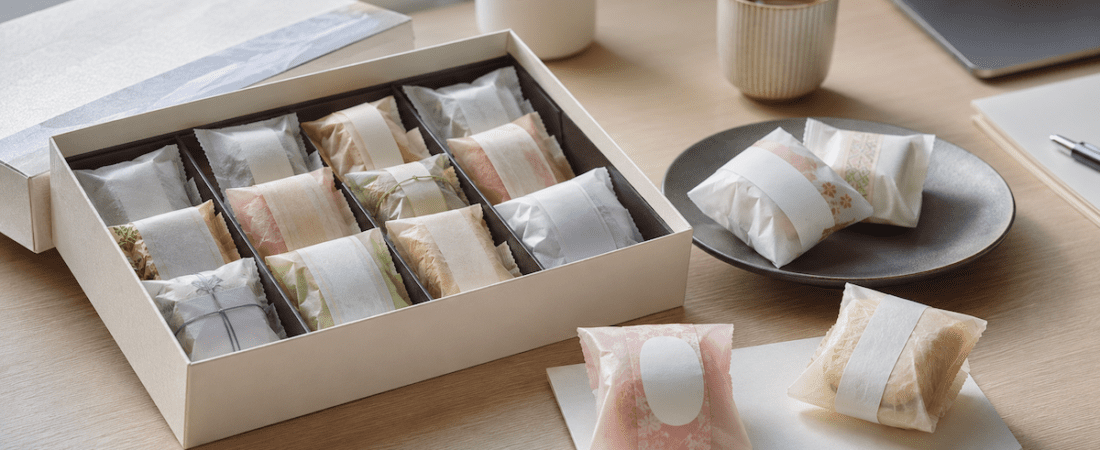
A Japanese colleague returns from a trip. The next morning, a box of individually wrapped sweets appears on the office desk. One for everyone. The colleague makes a small round, distributing them with both hands and a slight bow, saying something like, “I’m sorry for the inconvenience while I was away.”
The foreigner watches this and thinks: why is this person apologizing for going on vacation?
Welcome to omiyage.
What Omiyage Actually Is
Omiyage — お土産 — is usually translated as “souvenir.” But that translation misses most of what’s actually happening.
A souvenir, in the Western sense, is something you buy for yourself. A memento. A small object that holds a memory of a place.
Omiyage is something you buy for other people. Specifically, for the people you left behind while you went somewhere. And in a work context, that often means your team, your section, or everyone close enough to count.
The infrastructure built around this custom is remarkable once you notice it. Every tourist destination in Japan — every airport, every train station, every scenic area — has a dedicated omiyage section. The products sold there are almost universally designed for distribution: individual portions, neatly packaged, sized for exactly this purpose. A box of twelve cookies. A set of individually wrapped rice crackers. Chocolates in a flat box, easy to count, easy to divide.
This isn’t a coincidence. The entire product category has evolved to serve this specific social function.
The Obligation Layer
To understand why omiyage exists, you have to understand what it’s responding to.
When a Japanese employee takes time off, there’s an underlying awareness — sometimes stated, often not — that their absence creates work for others. Someone has to cover. Someone has to answer the emails. Someone has to absorb whatever would have been yours.
In a culture where taking vacation already carries a degree of guilt — Japan consistently ranks near the bottom of developed nations in vacation usage, with many workers leaving days unused — returning from a trip without acknowledging your colleagues would feel like adding insult to injury. You got to go somewhere. They didn’t. You owe them something.
Omiyage is that something.
The apology built into the ritual — often phrased as something like Gomeiwaku wo okake shimashita (“I’m sorry for the trouble I caused”) — makes this explicit. You’re not just sharing sweets. You’re performing a social transaction. Resetting the balance. Acknowledging that your pleasure came at a small cost to others, and offering something in return.
The Pleasure Layer
But here’s what I want to make clear: it’s not only obligation.
I did a lot of international business travel during my salaryman years. Every time I came back from abroad, I brought something back for the office — usually something from the country I’d been to, something nobody could easily find in Japan.
And people genuinely liked it. Not in a dutiful way. In a real way.
There’s something about receiving a small edible object from a place you’ve never been that works on a simple human level. It’s a taste of somewhere else. It’s evidence that someone, while traveling, thought about you. The omiyage from a foreign country carries more charge than the local rice cracker — it’s also a small story, a piece of geography wrapped in paper.
The obligation and the pleasure are not separate. They’re fused into the same gesture. That’s what makes omiyage more than just a social rule — it’s a social practice that actually works.
How This Differs From What Happens Elsewhere
People in the US and Europe bring things back for colleagues too. This isn’t uniquely Japanese.
The difference is in two things: whether it feels optional, and how wide the net is cast.
In most Western workplaces, bringing back vacation souvenirs for coworkers is optional. Nice if you do it. Fine if you don’t. You might bring something for the person who covered your most important client, or for the colleague you’re closest to. But there’s no expectation that you’ll buy for every single person in the office, and there’s certainly no apology attached to the giving.
In Japan, the expectation is closer to universal. Skip it and you’ll be noticed — not loudly, but noticed. Do it and the social debt is quietly settled. The omiyage functions as a kind of social lubricant: small, frictionless, repeated, expected.
The other difference is the packaging. Western souvenirs are often singular objects — a bottle of wine, a piece of local cheese, something for a specific person. Japanese omiyage is almost always divisible. It has to be. You’re serving the whole office.
A Note on What’s Changing
Remote work complicated omiyage significantly. When your colleagues are scattered across home offices, the physical round of distribution — placing a cookie on each desk, making the small bow — becomes difficult or impossible.
Some people adapted by bringing in treats on the day everyone happens to be in the office. Some people experimented with digital equivalents — gift cards, food delivery credits. Some people quietly stopped doing it at all.
Whether omiyage survives the structural shift toward remote work is an open question. The habit is old and deep. But habits that depend on physical presence are under pressure in ways they haven’t been before.
My guess — and it’s only a guess — is that omiyage will persist in some form. The social logic underneath it hasn’t changed: you went somewhere, others stayed behind, balance must be restored. The cookies are just the vehicle.
What the Foreigner Is Actually Watching
Back to that moment in the office. The colleague distributing sweets. The apology.
What the foreigner is watching isn’t someone being overly deferential or unnecessarily self-deprecating. They’re watching a highly practiced social choreography that maintains group cohesion in a workplace culture where individual absence is felt collectively.
It looks like guilt. It functions like glue.
And the cookies are usually pretty good.
All of the above is one Japanese person’s interpretation. Treat it accordingly.

Leave a Reply