
Japan Has Some of the World’s Best Management Tools. So Why Doesn’t It Work? – Part 2
This is a follow-up to Part 1, which introduced the concept of otoshidokoro — the Japanese approach to finding a landing point that everyone can accept. If you haven’t read it, it helps to start there.
Start with the numbers.
Japan’s labor productivity ranked 29th out of 38 OECD nations in 2023 — last among the G7, and well below the OECD average. Japan has consistently ranked at or near the bottom of this list for decades, despite working some of the longest hours in the developed world.
In 2022, Gallup’s global workplace engagement survey found that five percent of Japanese workers were engaged at work. Five. The global average was 23 percent. Japan ranked last.
These are not the numbers of a country whose management systems are working.
And yet.
The tools are genuinely good.
Kaizen — the philosophy of continuous incremental improvement — originated in Japan and was adopted by manufacturers worldwide. The Toyota Production System became a global model for operational efficiency. Lean manufacturing, which drew directly from Japanese practice, transformed industries from automotive to healthcare.
Nemawashi — the behind-the-scenes consensus-building process described in Part 1 — has been studied, praised, and in some cases replicated by Western companies trying to improve buy-in and reduce post-decision resistance. GE, under Jack Welch, introduced a process called Work-Out that drew on similar principles.
Hourensou — the structured practice of report, inform, consult — is regularly described in management literature as an exemplary communication framework. The idea that teams should stay aligned through regular, structured updates is not controversial. It’s good practice.
The concepts are sound. The intentions behind them are good. The results in Japan are not what the tools would predict.
Something is going wrong between the design and the execution.
The meeting about the meeting.
Let me describe something I’ve experienced more times than I can count.
A decision needs to be made. Before the formal meeting, there are informal conversations — nemawashi. In theory, this is where concerns get surfaced, the otoshidokoro gets identified, and the meeting becomes a formality that confirms what’s already been worked out.
In practice, what often happens is different. The nemawashi conversations become performative. Everyone says the right things. Nobody reveals their actual position. The formal meeting arrives, and instead of confirming a decision, it becomes a room full of people navigating around each other, trying not to be the one who causes a problem.
And then, somehow, a meeting ends. Nothing was decided. But a meeting was held.
I’ve been in that room. Many times. And I’ve asked, out loud, what I was never supposed to ask: “What is this meeting actually for?”
The question didn’t go over well.
The report nobody reads.
The same pattern appears in documentation.
There’s a phrase common in Japanese workplaces: toriaezu bunsho-ka — “let’s just document it for now.” It sounds responsible. In practice, it often means: let’s create a paper trail so that if anything goes wrong, the record shows we did something.
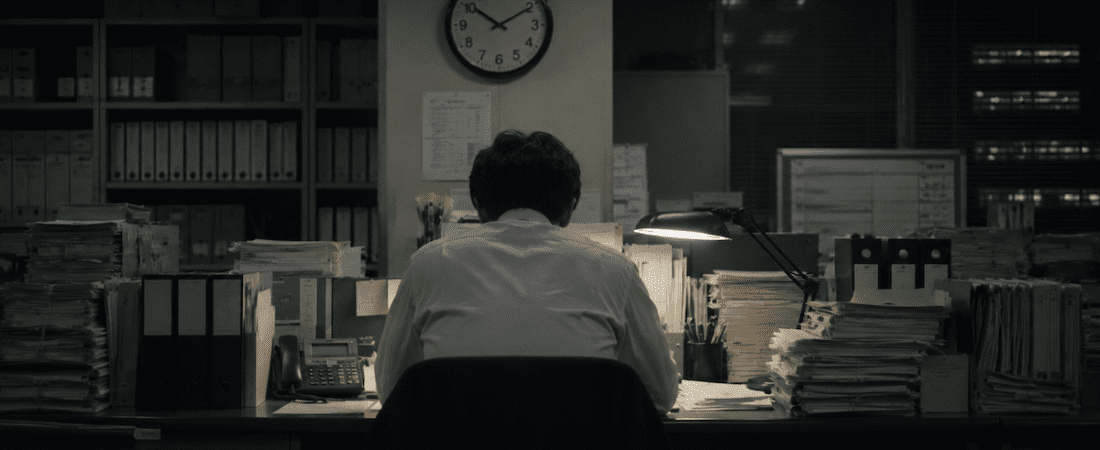
I’ve watched reports pile up — first on physical desks, now in shared drives — that nobody reads. Not because people are lazy. Because there genuinely aren’t enough hours to read everything that gets written. The volume is extraordinary. The impact is much smaller.
But here’s what the documentation does accomplish: it proves that reporting happened. The person who wrote the report has fulfilled their obligation. The person who received it has received it. The process is complete.
Nobody got the information. Nobody changed their behavior as a result. But the form was followed, and in many Japanese organizations, following the form is the job.
How hourensou stopped being communication.
I wrote about hourensou in an earlier piece as a tool for keeping teams aligned — the workplace equivalent of calling out your position on a pitch so your teammates know where you are.
What I didn’t write about is what happens when the calling out becomes the point, rather than the alignment.
Hourensou was designed so that information flows and problems surface early. What it becomes, in many organizations, is a system of regular updates that nobody acts on. The report gets filed because reports get filed. The update gets sent because updates get sent. Whether the information was useful, whether anyone needed it, whether it changed anything — those questions stop being asked.
The metric shifts from outcome to activity. And once that shift happens, the tool has become a ritual.
Why does this happen?
It comes back to something I’ve written about across these Work Culture pieces.
In Japan, doing the process is doing the job. If you held the meeting, you did the meeting. If you filed the report, you did the reporting. If you completed the nemawashi, you did the preparation.
Process completion is visible. Outcome quality is not.
So organizations — not through any conscious decision, but through the accumulated weight of habit and incentive — optimize for what’s measurable. Meetings happen because meetings are countable. Reports are written because reports are trackable. The otoshidokoro gets found because a landing point was always going to be found.
And nobody points this out. Because pointing it out would require someone to take a visible position, attach their name to a criticism, and invite the accountability that the system is designed to diffuse.
I know this because I tried. More than once, in more than one organization, I asked the question that wasn’t supposed to be asked: why are we doing this? What is this meeting for? Who is reading these reports?
The question was not well received. The structure did not change.
What the numbers are telling us.
A five percent engagement rate doesn’t come from people who don’t care about their work. In my experience, most Japanese workers care deeply. The disengagement comes from something more specific: the feeling that effort doesn’t connect to outcome. That the meeting was going to happen anyway. That the report was going to be filed anyway. That the landing point was going to land where it was always going to land.
When process is the point, individual effort becomes invisible. And when effort becomes invisible, engagement follows.
The productivity numbers tell the same story from a different angle. Japan works long hours. The output per hour is among the lowest in the developed world. Time is going in. Results are not coming out at the rate they should.
The tools didn’t cause this. But the tools, used as rituals rather than instruments, are part of why it persists.
I don’t have a solution.
I want to be honest about that.
I’ve spent more than two decades inside organizations where this dynamic played out. I pushed back where I could. I asked the uncomfortable questions. I tried to redirect meetings toward actual decisions and reports toward actual readers.
It didn’t work. Not at the structural level. Individual moments of clarity, yes. Lasting change to how the organization operated, no.
I don’t think that’s because the problem is unsolvable. I think it’s because the solution requires something the system actively discourages: someone being willing to say, clearly and with their name attached, that the emperor has no clothes. That the meeting produced nothing. That the report changed nothing. That the otoshidokoro landed in the wrong place.
That person exists in most organizations. They just rarely stay long enough to matter.
All of the above is one Japanese person’s interpretation. Treat it accordingly.



Leave a Reply