
Japan Doesn’t Have a Vacation Culture. It Has a Vacation Schedule.
Golden Week. The first week of May, when Japan collectively decides to go everywhere at once.
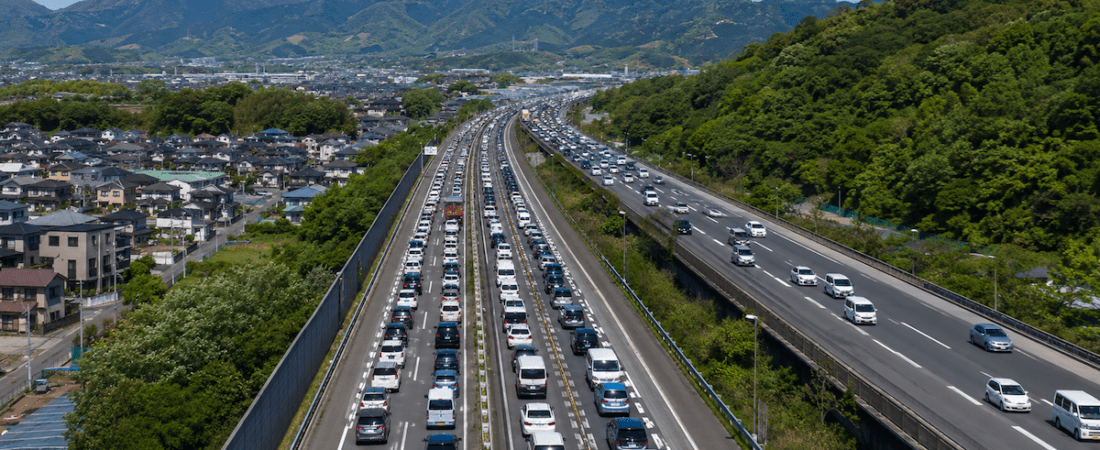
Trains are packed. Highways are gridlocked. Hotel prices double. Popular tourist spots look like rush hour. Everyone knows this is going to happen. It happens every year. And yet — the crowds are always there.
From the outside, this looks irrational. Why would millions of people choose to travel at the single most congested, expensive time of year?
The short answer is: most of them don’t have a choice.
The difference isn’t the rush. It’s the degree of choice.
In many countries, holiday rushes exist. The path of least resistance is crowded, but there are other paths — take vacation a week earlier, skip the trip entirely, drive at an unusual hour. Most people go along with the crowds, but opting out is possible.
In Japan, for most people, there aren’t other paths.
Japan has 16 public holidays per year, which is high by international standards. On paper, Japan is not a country that denies its people rest.
But Japan’s real long breaks cluster. Golden Week in late April and early May. Obon in mid-August. New Year’s from late December into January. The rest of the year has holidays scattered through it, but the long stretches — the ones where you can actually travel somewhere — fall in these three windows.
And into those three windows, an entire country tries to move.
Part of this is structural and hard to change.
Many Japanese companies, particularly in manufacturing and supply chains, operate on synchronized schedules with their clients and partners. When the client shuts down for Golden Week, the supplier shuts down too. When the supplier shuts down, their suppliers shut down. The whole chain closes at once, and no single company can unilaterally decide to stagger its schedule without disrupting relationships built over decades.
Nobody sat down and decided that Japan’s entire workforce should take vacation simultaneously. It just accumulated — each company responding to the company above it in the chain, until the pattern became so entrenched that changing it would require everyone to change at once, and nobody wants to go first.
Nobody wants to go first. That phrase could describe a lot of things in Japan.
But the structural explanation only goes so far. Because even for people whose companies don’t mandate specific vacation periods, the clustering persists.
The real constraint, for most families, is children.
School calendars in Japan are fixed. Spring break, summer break, winter break — the windows are set, and they overlap with the same windows families can realistically travel: Golden Week, Obon, and New Year’s. A family with school-age children doesn’t have the option of taking a trip in, say, late September, because the children are in class.
And here’s where it gets interesting. Taking a child out of school for a few days — even for a family trip, even briefly — carries a weight in Japan that it doesn’t carry everywhere.
There are calls from teachers. Questions about attendance records. Vague anxiety about how absences might look on academic evaluations. The pressure isn’t just about missed lessons — it’s about the child being seen as stepping outside the group’s script. In a system that still quietly values perfect attendance as a signal of reliability and cooperation, an unexplained absence registers as something more than just a day off.
None of this is necessarily severe in practice, but the pressure is real enough that most parents don’t do it.
I’ll admit I’ve done it. Taken my kid out for a few days, gone somewhere quiet, come back before anyone noticed. My wife and I coordinate our schedules in advance and deliberately avoid the peak windows. I’m not recommending this as a general strategy — the school was not thrilled — but I mention it only to illustrate how unusual this choice feels in a Japanese context. It shouldn’t feel unusual. But it does.
The pressure to not take children out of school is, when you look at it closely, the same pressure that makes adults reluctant to take paid leave.
You have to explain yourself. Someone will have to cover for you. The system wasn’t designed with your individual timing in mind, and stepping outside that timing creates friction — friction that most people find easier to avoid than to manage.
So the path of least resistance is to go when everyone else goes. Accept the crowds. Accept the prices. Accept the gridlock on the expressway. Because the alternative — coordinating schedules, pulling kids from school, going against the grain — requires a level of deliberate friction that the culture doesn’t particularly reward.
This is changing, slowly.
Remote work has given some workers more flexibility. Some local governments are now experimenting with family-learning days — allowing children to miss school for educational experiences outside the classroom — but the fact that these need special names and rules tells you how unusual the idea still feels. Some companies are experimenting with staggered vacation policies.
But the underlying pattern — everyone moving at once, because the system was never designed for anything else — is deeply embedded. Not in any one rule or law, but in the accumulated weight of how things have always been done, and the social cost of being the one who does them differently.
Japan doesn’t lack holidays. It lacks a system that lets people use them on their own terms.
All of the above is one Japanese person’s interpretation. Treat it accordingly.
Leave a Reply