
In 1995, Japanese High Schoolers Were Carrying Louis Vuitton. The Rest of the World Is Just Catching Up.
Recently, one of my son’s friends — a ten-year-old boy — told me that what he really wanted for his birthday was his dad’s Louis Vuitton bag.
Ten years old.
I laughed. Not unkindly — I just couldn’t help it. The kid had no real idea what Louis Vuitton was. He couldn’t explain the history, the craftsmanship, or the price point. He just knew it was the bag his dad had. And that made it desirable. I’m not saying this is typical of ten-year-olds in Japan today — it was just one kid, one moment. But it stuck with me, because it felt like something I’d seen before.
That moment wasn’t typical. But the logic behind it felt very familiar in Japan.
The 1990s: when everyone had the same coin purse.
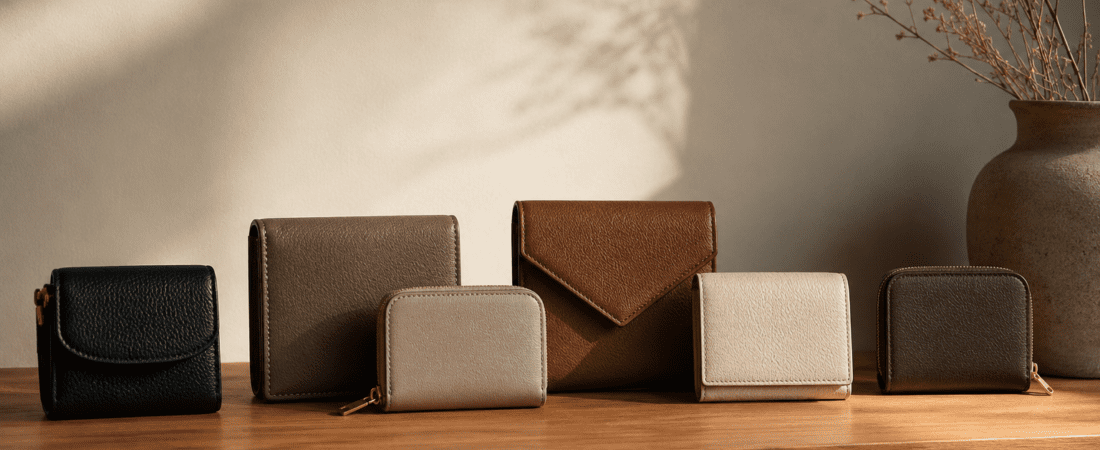
In many urban areas in the mid-1990s, it wasn’t shocking to see Japanese high school girls carrying Louis Vuitton, Gucci, or Chanel coin purses. Not knockoffs. The real thing.
It wasn’t every girl, of course. But it was common enough that no one treated it as bizarre. This wasn’t the children of the wealthy showing off. This was a broad phenomenon. Part-time job money saved up. Birthday gifts requested with alarming specificity. The monogram canvas was everywhere — on trains, in classrooms, at convenience stores.
From the outside, this looked like conspicuous consumption. From the inside, it was something more calculated.
Japan in the 1990s was a culture where “what everyone else has” was communicated primarily through magazines and television. There was no internet. No social media. But there were extremely influential fashion magazines and a handful of tastemaking TV programs that could launch a trend nationally within weeks. Tokyo would explode with something, the magazines would cover it, and within months it would be in every prefecture.
Louis Vuitton wasn’t just a coin purse. It was a correct answer. And in Japan, having the correct answer matters enormously.
What’s a “correct answer” in fashion?
Japan is a culture where being wrong — making the wrong choice, buying the wrong thing, liking the wrong thing — carries real social weight.
The safest way to avoid being wrong is to align yourself with something that has already been validated. A brand with global recognition, decades of history, and a price tag that signals you understood the assignment. Louis Vuitton checks all of those boxes.
You can see a similar structure in queues, blood type personality talk, and fortune telling. Outsource the judgment. Align with the validated. If it goes wrong, at least you made the “right” choice.
A genuine Louis Vuitton coin purse doesn’t just say “I have money.” It says “I made a safe choice that no one can criticize.” In a culture where being criticized for your taste is a real social risk, that’s worth a lot.
Today it’s different. Sort of.
The monolithic brand worship of the 1990s has fragmented. There’s no single “correct answer” anymore — partly because social media has multiplied the channels through which taste is communicated, and partly because the definition of a “brand” has expanded enormously.
Supreme. Off-White. Maison Margiela. Kith. Korean beauty brands. Limited sneakers. Collaboration items. Character goods. The options for validated, externally-approved consumption have multiplied. And the consumer has gotten younger — not just high schoolers carrying luxury coin purses, but middle schoolers chasing limited sneaker drops.
The ten-year-old who wants his dad’s Louis Vuitton coin purse isn’t a relic of the 1990s. He’s just operating on older software.
One more thing.
This isn’t uniquely Japanese anymore — if it ever was.
The Supreme frenzy. The Labubu phenomenon. Limited drops that sell out in seconds, resale markets that multiply prices tenfold, social media feeds full of unboxings and flex posts. The structure is identical to what Japan was doing in 1995: find the validated object, acquire it, display it, belong.
Japan didn’t invent brand worship. But in the 1990s, it developed a highly efficient version of mass validation through magazines, television, scarcity, and shared social signals — decades before the rest of the world had the infrastructure to replicate it. What looks new in global streetwear and collectible culture is, to anyone who was in Japan in the 1990s, oddly familiar.
There’s more to say about that — but that’s a different article.
BTW — back in those days, I was carrying a biker wallet with a chain. Somewhere around 30 I switched to Gucci or Louis Vuitton. Now it’s mostly just my phone.
Make of that what you will.
All of the above is one Japanese person’s interpretation. Treat it accordingly.



Leave a Reply