
Why Japan Changes So Fast — But Never Seems To
Japan doesn’t change. That’s the story.
The punctual trains. The centuries-old temples. The rituals around food, around greetings, around the way you hand someone a business card. Japan, the story goes, is a place where things endure.
Spend enough time here, though, and a different picture starts to form.
The Things That Disappeared.
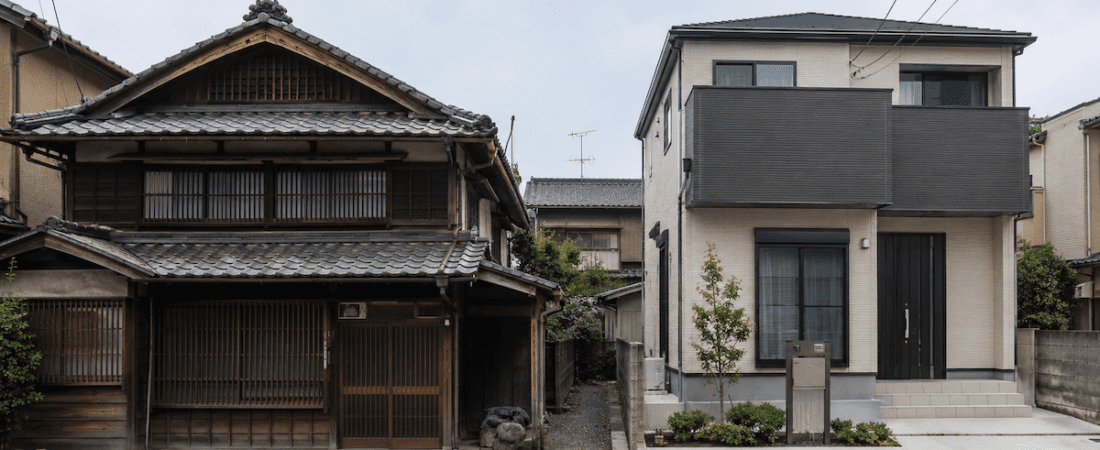
The kimono was everyday clothing within the memory of older generations. Now it appears at weddings, coming-of-age ceremonies, and tourist photo booths in Kyoto. The traditional wooden house — built to breathe, designed around the seasons, constructed without nails in its oldest forms — has been largely replaced by prefabricated houses the market often treats as thirty-year products. Some shotengai, the covered shopping streets that defined neighbourhood life for generations, stand half-empty or converted into something else.
These weren’t swept away by war or disaster. They were replaced because something newer came along. And then that something newer was replaced too.
Walk through central Tokyo and you notice it differently. Buildings that were there three years ago are gone. Storefronts that seemed permanent have been replaced by something shinier. The city’s surface turns over at a pace that feels almost biological — skin shedding, constantly regenerating. We discard objects without hesitation. What we resist discarding is the systems and relationships built around them.
Japan has one of the fastest trend cycles of any consumer culture in the world. Fashion subcultures emerge, peak, and vanish within a few years. Food trends — the queue-around-the-block shop that everyone must visit — appear suddenly, saturate, and disappear. The premium white bread shop is a recent example: around 2020, hundreds of near-identical establishments opened across Japan, each promising the softest, most luxurious loaf imaginable. Many have since disappeared, consolidated, or stopped feeling like a national obsession.
For a country that supposedly cherishes tradition, a lot of tradition has been quietly discarded.
So What Actually Gets Kept?
Look at what stays, and a pattern emerges.
Japan changes quickly when change is consumer choice. It changes slowly when change is institutional cost.
The things that change tend to be the ones that don’t require anyone powerful to give anything up. Wearing a kimono daily was inconvenient. Stopping was easy — nobody with power had to negotiate, lobby, or absorb a loss. The same with the wooden house, the neighbourhood shop, last season’s fashion. They faded because choosing something different cost nothing significant to the people who mattered.
The things that don’t change are different. The seniority system. The consensus-before-decision process. The way organisations are structured, how authority flows, who gets to speak and when. These have costs attached — to the people who benefit from them, to the institutions built around them, to the whole architecture of how things get done.
Those things stay. Not because they’re traditional. Because changing them is expensive for someone.
“Tradition” turns out to be a selective category. It covers what is convenient to preserve.
Kimonos and shotengai faded because the people who lost from that change didn’t have enough power to stop it. The seniority system and the decision-making hierarchy remain because the people who would lose from changing them are exactly the people with the power to prevent it.
The Outside Voice.
Deeper structural change often moves faster when an outside voice gives it legitimacy.
The internal conversation can circle for years without resolution. The same issues get identified, discussed, and deferred. Then something external arrives — a foreign comparison, an international ranking, a pressure from a major trading partner — and things move.
There’s a related pattern with cultural value. Japanese creativity travels abroad, gets recognised there, and returns home with a different status. City pop. Certain craft traditions. Anime and manga, which existed for decades before the rest of the world noticed. The same thing that existed before, now legible because the outside world said so.
External validation carries a particular weight here. Not because Japanese people lack confidence in general, but because internal consensus on value is slow and contested — and the outside world’s verdict can cut through that in a way that domestic conversation often can’t.
What This Is About.
Japan doesn’t resist change. It resists the cost of change — and it waits for someone else to authorise it.
The kimonos and the shotengai were consumer products. The seniority system is load-bearing for the people who maintain it.
And when Japan does move, it often moves because the outside world moved first.
Why that is — what it says about how Japanese culture forms its own self-image, and why external validation carries the weight it does — is a longer story. But it starts here.
All of the above is one Japanese person’s interpretation. Treat it accordingly.


Leave a Reply