
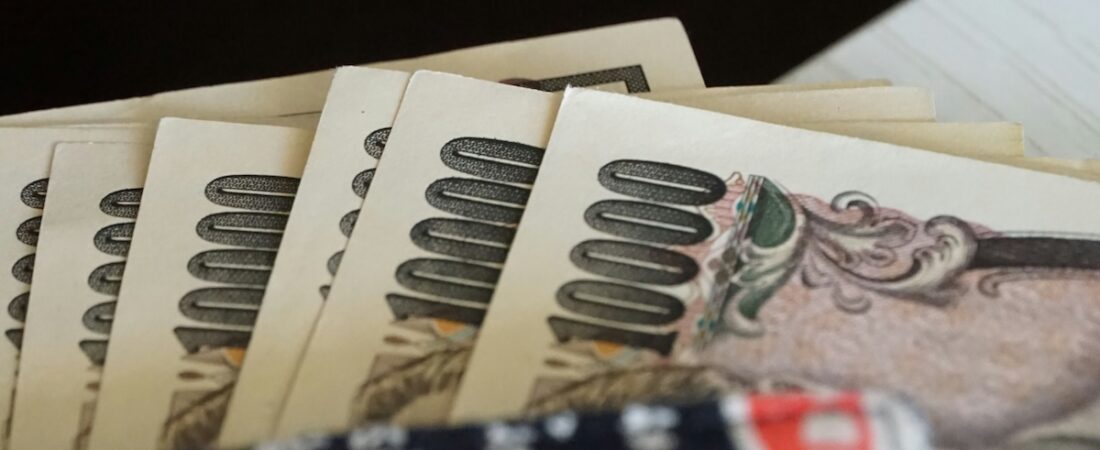
Japan Has the World’s Best Tech. It Runs on Cash.
You’re standing in front of a ticket machine at a ramen shop in Tokyo. You’ve selected a bowl for ¥900. You look for the card slot, but there isn’t one. Just a small sticker near the buttons: 現金のみ — cash only.
This happens. More than it should, for a country that put robots in its airports and heated seats in its toilets.
The easy answers exist, and they’re real.
Japan is safe — genuinely, unusually safe. Losing a wallet here and getting it back with the cash still inside is not a remarkable story; it’s a Tuesday. When theft isn’t a serious concern, the urgency to go digital drops considerably.
Japan is old. Almost 30 percent of the population is over 65. For many in that generation, a smartphone payment app isn’t a convenience — it’s a source of anxiety. Cash is familiar, tactile, and immediate. It doesn’t require a PIN, a signal, or a battery.
Japan has earthquakes. Typhoons. Tsunamis. Digital payment infrastructure requires power and connectivity. Cash requires neither. For a country that has lived through repeated infrastructure failures, keeping physical money on hand isn’t paranoia — it’s preparedness.
And Japan’s cashless systems fragmented early. Edy, Suica, PASMO, iD, QUICPay, PayPay, Rakuten Pay — none of them ever fully unified. Consumers ended up juggling cards and apps that didn’t work everywhere, and fell back on the one thing that always worked.
These are the structural reasons. They explain a lot.
But they don’t explain everything.
There’s something underneath the infrastructure arguments that doesn’t get talked about as much.
Many Japanese people — not all, but enough to matter — are uncomfortable with the idea of their spending being tracked. Card transactions leave a record. Cash doesn’t. In a society where privacy is taken seriously, and where a certain portion of the population is genuinely wary of sharing financial information with institutions, cash offers something digital payments can’t: anonymity.
Cash does two things at once: it protects privacy, and it makes spending feel physically real.
This runs deeper than technology preference. It touches something about how money is understood here.
For a long time, Japan’s default money morality leaned toward saving.
Not because Japanese people are naturally cautious — people are people, and individual variation exists everywhere. But there’s a tendency, a cultural lean, that shows up consistently enough to be worth examining. And that lean came from somewhere.
The generation that rebuilt Japan after the war taught their children specific things about money. Save before you spend. Debt is something to be ashamed of. Cash in hand is real; everything else is an abstraction. Those children taught their children the same things. The values traveled down through families not as policy but as instinct — the kind of instinct you don’t examine because it feels like common sense.
I remember watching my parents count out banknotes on the kitchen table — carefully, deliberately, as if the physical act of handling money was itself part of the transaction. There was a weight to it that a tap of a card doesn’t carry.
The result is a relationship with money that treats spending as something requiring justification, and saving as the natural default.
Compare that to the United States, where credit is not just a payment method but part of the financial infrastructure. Where carrying debt is normal, leverage is a tool, and a credit score is a social credential. Where the cultural assumption is that money is for moving, not holding.
Neither is objectively right. They’re just different philosophies about what money is for — and those philosophies shaped everything downstream. Including what you look for at a ticket machine.
This is changing. Slowly, but genuinely.
Japan’s cashless payment ratio reached 42.8% in 2024, passing the government’s 40% target — up from around 24% in 2018. The 2025 Osaka Expo ran entirely cashless. Younger generations are comfortable with QR codes in a way their parents aren’t.
Even so, cash remains unusually visible in everyday life — especially in small restaurants, clinics, temples, local shops, and older neighborhoods. The infrastructure is shifting. The habit is shifting more slowly.
Habits built over generations don’t reverse in a decade. The wariness around debt, the preference for tangible money, the quiet distrust of systems that track you — these things don’t disappear because the government launches a cashless campaign.
For the record: I use cards and apps without much thought. This isn’t my personal hang-up.
But I grew up watching how money was talked about in Japanese households — carefully, seriously, with a kind of weight attached to it that I didn’t fully understand until I spent time around people for whom money moved differently. Freely. Almost carelessly.
That contrast told me more about Japan’s cash culture than any statistic.
All of the above is one Japanese person’s interpretation. Treat it accordingly.



Leave a Reply