
Sorry. That’s How We Say Thank You.
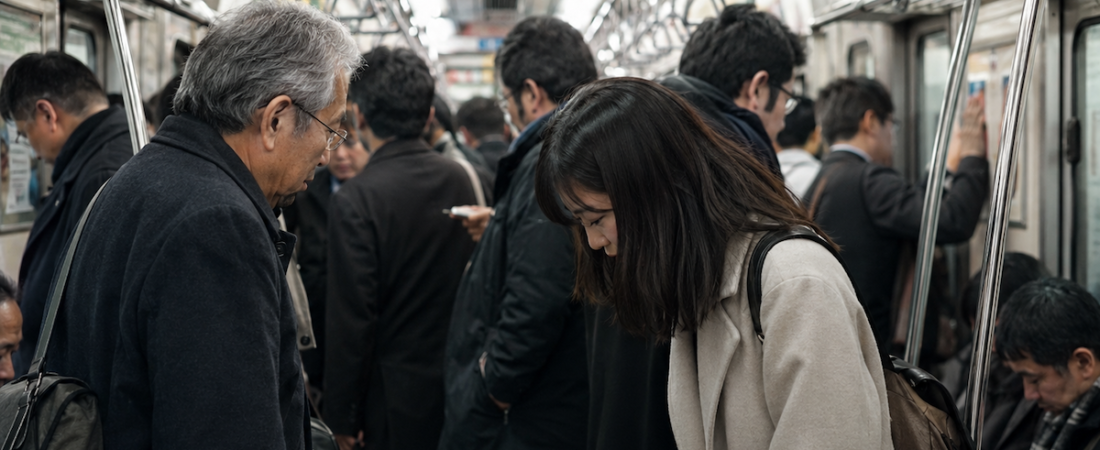
You just gave up your seat on a crowded Tokyo train for an elderly woman. She looks at you, bows slightly, and says — “Sumimasen.”
You probably expected “Arigatou.” You got “Sorry” instead. What just happened?
It’s not a mistake. It’s a completely different operating system.
In Japan, “sumimasen” can express gratitude when someone has taken trouble or created a small burden for your sake.
In English, “sorry” and “thank you” usually live in separate boxes. One admits fault. The other expresses gratitude. They don’t overlap.
In Japan, they do — and understanding why tells you something fundamental about how Japanese people relate to each other.
The word is “Sumimasen.”
Etymologically, it means something like “this doesn’t end here” — as in, what you’ve done for me cannot be fully repaid. It’s used for apologies, yes. But also for getting someone’s attention, for asking a favor, and — most confusingly for foreigners — for saying thank you.
My sister does this constantly. Whenever I do something for her, she says “Gomen ne” — sorry. Not thank you. Sorry.
What she means is: “I’m sorry for the trouble I’ve caused you.”
The focus isn’t on what she received. It’s on what I had to give up.
That shift in focus is everything.
When a Japanese person says sorry instead of thank you, they’re not thinking only about themselves. They’re thinking about you — specifically, the cost you paid to help them. The time. The effort. The inconvenience.
“Thank you” puts the speaker at the center: I received something good. “Sumimasen” puts the other person at the center: You gave something up for me.
Sometimes it’s just habit. Sometimes it’s etiquette. But underneath it is a familiar Japanese reflex: noticing the burden placed on someone else, even when they offered willingly.
This is also why “reading the air” matters so much in Japan: people are not only responding to words, but to the small social weight created around them.
This runs deep.
It shows up between strangers on trains. It shows up between colleagues at work. It shows up between siblings who’ve known each other their whole lives.
That last part matters. If it were just social etiquette, you’d expect it to disappear at home, with people you’re close to. It doesn’t. Which suggests it’s not only a rule Japanese people follow. It’s a lens they see through.
So next time someone in Japan apologizes when you expect a thank you — they’re not confused. They’re just looking at the situation from your side of it.
Honestly? There are worse habits to have.
All of the above is one Japanese person’s interpretation. Treat it accordingly.

Leave a Reply