I Said “Chiketto.” They Had No Idea.
My first time in America, alone, I needed a bus ticket.
I walked up to the information counter and said: “Chiketto.”
Nothing.
I tried again. Still nothing. For about ten minutes I stood there, saying the same word with increasing desperation, until finally — out of options — I tried something different.
“Tih-ket.”
Immediate recognition. Problem solved.
I had known the word my entire life. I just didn’t know how to say it.
This is what katakana does.
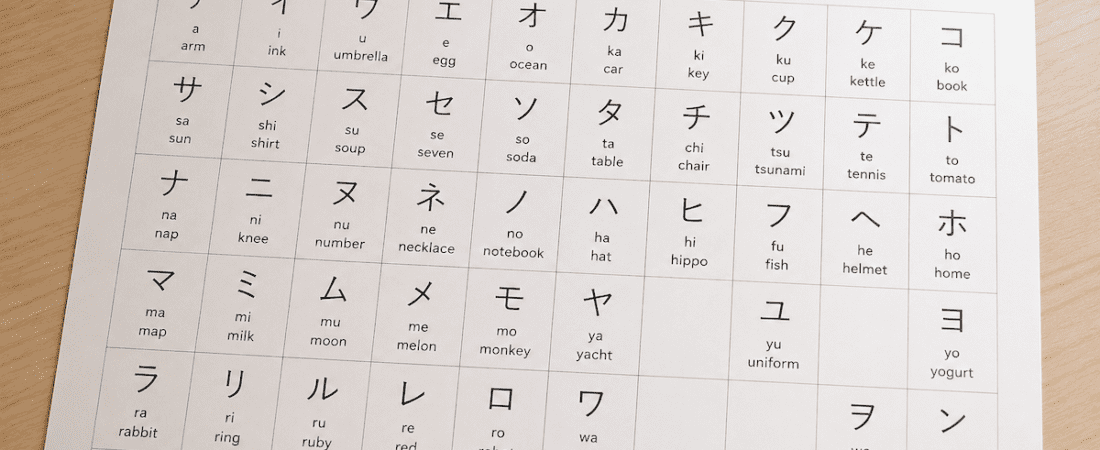
When English enters Japanese, it passes through a filter called katakana — the phonetic alphabet used to write foreign words. Katakana doesn’t just transcribe words. It transforms them, fitting them into the sounds that Japanese uses, dropping the ones it doesn’t.
“Ticket” becomes chiketto. “Coffee” becomes koohii. “Milk” becomes miruku. “McDonald’s” becomes Makudonarudo.
The meaning survives. The sound doesn’t.
So a Japanese person who has “known” a word for twenty years may have never actually heard it — only their own language’s version of it. When they try to use it with a native speaker, they’re producing a sound that doesn’t match anything in that speaker’s experience.
They said the right word. It just came out as a different language.
And then there are the words that went further.
Some English words didn’t just get their pronunciation changed. They got their meaning changed too.
Mansion in Japanese means apartment. Smart means slim, not intelligent. Tension means excitement or energy, not stress. Naive means sensitive or delicate, not gullible.
Others came from languages that aren’t English at all. Arubaito (part-time job) came from the German word Arbeit, meaning labor. Pan (bread) came from the Portuguese word pão. Marron (chestnut) is French.
The result is a language that looks like it contains a lot of English, but often doesn’t behave like English at all.
Meanwhile, Japan keeps making new ones.
“Encount” has recently entered casual Japanese slang — originally from online gaming, where encountering an enemy was called an “encount.” The word doesn’t exist in English. It’s a Japanese invention built from English parts, that escaped the screen and became everyday slang for bumping into someone.
The cycle continues. English comes in, gets filtered, gets reshaped, sometimes gets a completely new meaning, and eventually stops being recognizable to the people it came from.
And here’s where it compounds.
A Japanese person who grew up with chiketto and koohii and encount steps into an English conversation and discovers that the words they thought they knew don’t land. The reaction often isn’t “I need to adjust my pronunciation.” It can become “English is just too difficult.” The language that was supposed to be a bridge becomes evidence that the gap is unbridgeable.
It isn’t. But the filter made it look that way.
All of the above is one Japanese person’s interpretation. Treat it accordingly.



Leave a Reply