
You Didn’t Order Otoshi. You Still Have to Pay.
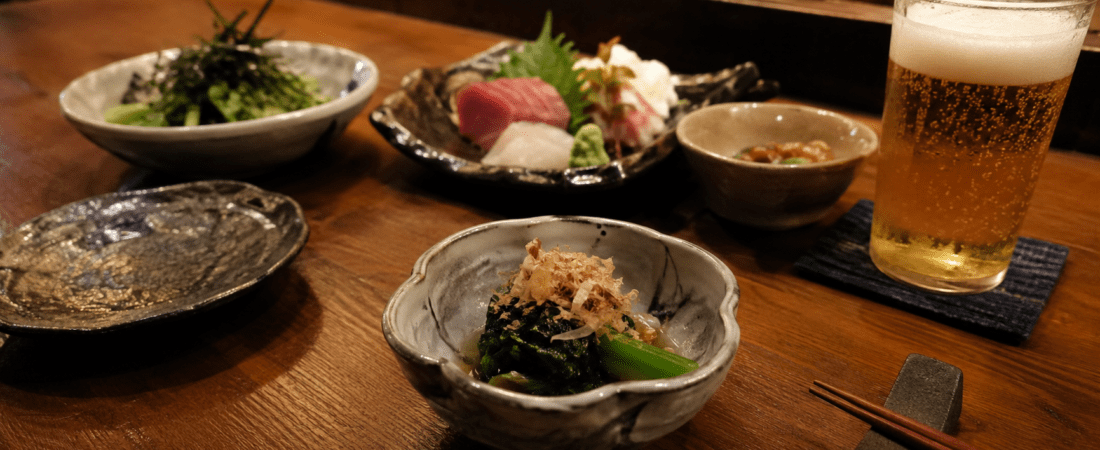
You sit down. Someone hands you a hot towel. Before you’ve said a word, a small dish appears on the table — maybe pickled vegetables, maybe a tiny salad, maybe something you can’t identify.
Then the server asks: “Otōshi, daijōbu desu ka?”
You nod, because you don’t know what else to do.
You’ve just agreed to pay for something you didn’t order.
What is otōshi?
Otōshi is a small appetizer that arrives automatically when you sit down at many izakayas and Japanese bars. You don’t choose it. You don’t ask for it. It just appears.
And yes, it costs money. Usually between ¥300 and ¥600 per person, though some places charge more.
The standard explanation is that it functions like a cover charge — you’re paying for the seat, the service, the fact that you can sit there for two hours nursing drinks. The food is just the vehicle.
That explanation is technically accurate. But here’s what bothers me about it: if it’s a cover charge, why not call it a cover charge?
In many countries, restaurants that charge for seating just say so. “Cover charge: ¥500.” Clean. Honest. No surprises.
Japan tends not to do this. Instead, a small dish appears, money changes hands, and the transaction is softened into something that looks like hospitality. You’re not being charged — you’re being welcomed. The ambiguity is the point.
Some places do list it clearly now. But culturally, otōshi still often arrives as a dish first and a charge second.
If that sounds familiar, it should. It’s the same instinct that makes people say sumimasen instead of thank you, and stay quiet on trains instead of asking someone to lower their voice. Friction gets absorbed. Things that could be said directly are said sideways instead.
I’ll be honest: as a Japanese person, this one still gets to me. A cover charge I can accept. A mystery dish of varying quality that I didn’t ask for and usually can’t refuse — that’s harder.
The order of operations.
Once you’ve made peace with the otōshi, there’s an unspoken sequence to how a Japanese drinking session unfolds.
It starts with “toriaezu bīru” — “beer for now.” Not “I want beer.” Not “I’ll have a beer.” For now, beer. The implication being that what you actually want can wait until the social situation has been established.
This is worth pausing on. “Toriaezu” — “for now,” “anyway,” “just to start” — is one of those words that reveals something. The first drink isn’t really about the drink. It’s about synchronizing with the group. Everyone orders the same thing. The table starts together.
After the first round, the food arrives in a loose sequence: light dishes first, heavier ones later, something carb-based at the end if anyone makes it that far. There’s no strict rule, but there’s a rhythm. Regulars feel it. First-timers sometimes accidentally order the rice dish third and feel the mild confusion of the table.
A word of warning.
If you’re drinking in areas like Kabukicho in Shinjuku, Susukino in Sapporo, or certain parts of Osaka’s nightlife districts — be careful with touts outside bars.
The standard move: a friendly person approaches you on the street, promises cheap drinks and a good time, and leads you to a bar where the table charge or otōshi turns out to be ¥5,000, the drinks are ¥3,000 each, and leaving requires a conversation you don’t want to have.
This isn’t a rare edge case. It happens regularly, and foreign visitors are frequent targets. The tell is almost always the approach on the street. Legitimate bars don’t need to recruit customers from the sidewalk.
If someone approaches you outside a bar with a special deal: keep walking.
Back to the otōshi.
Here’s the thing — once you know what it is, otōshi is usually fine. Sometimes it’s good. Occasionally it’s genuinely great, and you end up ordering more of it.
The problem was never the dish. It was the surprise.
Japan runs on a lot of unspoken agreements. Most of them work because everyone involved already knows the rules. As an outsider, the learning curve is just steeper.
Order the beer. Accept the small dish. See what it is.
All of the above is one Japanese person’s interpretation. Treat it accordingly.


Leave a Reply