
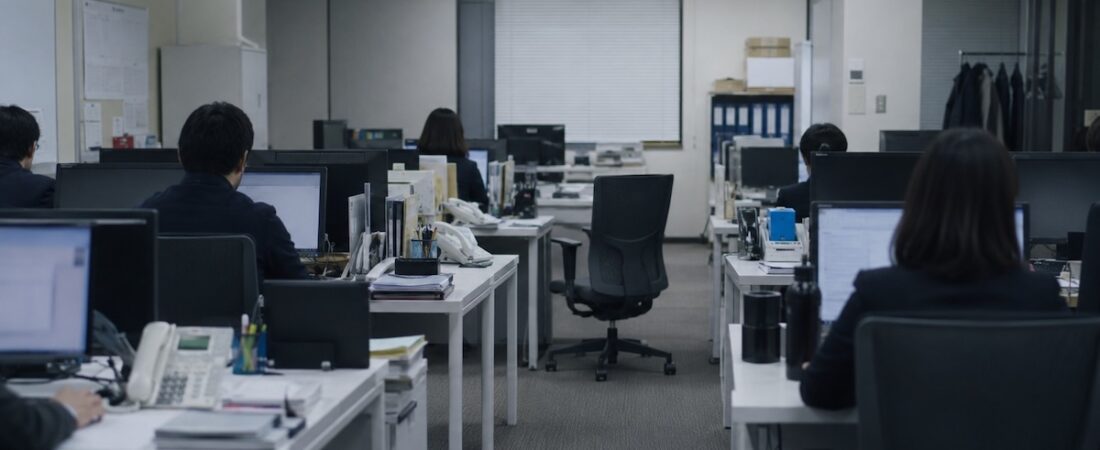
Japan’s Gray Companies Are Not Black. But They Are Not Safe Either.
Why the most confusing workplaces in Japan do not look like a problem until you are inside one.
I have probably never worked at a black company.
That sounds like a good thing. And legally, maybe it is.
But I have worked in places where nobody had to shout, nobody had to threaten, and nobody had to write an illegal order for the pressure to be real.
That is the difficult part of Japanese work culture. Some workplaces are not black. They are just gray enough for everyone inside to call them normal.
The Definition That Does Not Exist
“Black company” has no clean legal definition in Japan. Even the Ministry of Health, Labour and Welfare does not define the term directly. It lists typical characteristics instead: extreme overtime or quotas, unpaid overtime, harassment, weak compliance culture, and harsh pressure on workers.
In practice, most Japanese people reserve the label for extreme cases — the kind that end up in the news. The bar is high. And because the bar is high, a lot of workplaces that are genuinely unhealthy never get called black. They get called normal.
That is the problem.
How the Gray Zone Gets Built
Gray workplaces are rarely created by one person with bad intentions. In my experience, the pattern is more like this: inherited expectations, fear of conflict, and pressure that gets passed down the hierarchy.
A senior manager may have absorbed an older Japanese work model — total dedication as a baseline, staying late as proof of commitment. They pass that expectation downward without naming it. The person in the middle receives it, does not want to absorb it alone, and passes it further down, often adding their own layer. Nobody at any level decided to exploit anyone. But the structure does it anyway.
I have worked in places that were probably not black. But I have also seen how much can be hidden inside the word “normal.”
Why the Pressure Is Hard to Interrupt
In many Japanese workplaces, pushing back is not treated as a normal part of improving the system. It can feel like damaging a relationship. That makes the gray zone difficult to interrupt.
When you challenge an idea in Japan, it is often received as a challenge to the person who said it. Meetings go quiet. Problems stay unspoken. The person at the bottom of the pressure chain has no obvious way to push back without a social cost most people are not willing to pay.
This is what I have always found strange. Many Japanese workers know exactly what is happening. They are not fooled. They just do not know how to make the problem speakable without becoming the problem themselves.
This is not unique to black companies. It is closer to the operating system.
What Foreign Workers Actually Experience
Nobody tells you not to go home. But when you stand up at 6:00, the room notices.
Foreign workers who come from companies where job scope, working hours, and disagreement are treated more explicitly often hit something they did not expect. Not dramatic abuse. Something quieter.
The job description that expands without discussion. The overtime that is never ordered, only expected. The sense that leaving on time, even with the work finished, is a statement. The inability to say “that is not my job” without damaging a relationship.
None of this is black. By Japanese standards, it barely registers.
There is a useful analogy here. I do not mean gray workplaces and harassment are the same thing. But in both cases, intent is not the whole story. What the other person receives also matters.
The manager who stays late because that is just what you do, and silently watches who leaves early, is not issuing a threat. But the person watching them watch is receiving one.
The Word “Black Company” May Be Part of the Problem
There is an irony here.
Because “black company” describes something so extreme, it gives ordinary workplaces a kind of cover. A manager can say: we pay overtime. No one gets screamed at. We are not black. And technically, that may be true.
But the question was never whether it is black. The question is where the workplace starts eroding the person inside it — quietly, across months, through expectations that were never stated and can never be refused.
Japan’s gray companies survive because many people inside them have reached an agreement, usually unspoken, to call certain pressures normal. Foreign workers arrive without that agreement in place. They feel the pressure without the social wiring that makes it bearable. And when they try to describe it, they are often told: this is just how Japanese companies work.
That is true. That is also the problem.
Japan Is Changing. But the Gray Zone Is Harder to Measure.
It would be wrong to say nothing has changed.
Japan has introduced work-style reforms. Overtime is now legally capped. Companies are more careful about harassment. Younger workers are less willing to treat self-sacrifice as proof of loyalty. Even inside Japanese companies, the old model no longer feels as unquestionable as it once did.
But the gray zone is harder to reform. It lives in expectations, not in rules. In the timing of who stays late. In who becomes “difficult” after naming something everyone already knew.
That is why foreign workers often notice it clearly. They have not fully learned which discomforts are supposed to be swallowed. And maybe that outside discomfort is useful — not because foreigners understand Japan better than Japanese people do, but because they sometimes react to things Japanese workers have been trained to explain away.
That agreement to call it normal is not as stable as it used to be. Younger Japanese workers often do not accept it as naturally as older generations did. Even companies that still behave this way now have to explain themselves more than before.
So when someone says, “this is just how Japanese companies work,” I do not think the answer is simple rejection. Sometimes it is true. But it is also becoming less true than it used to be.
And that may be where the conversation begins.
Practical Note
This article is a personal interpretation, not legal advice.
If you are a foreign worker in Japan, the first useful question may not be, “Is this company black?” It may be:
- Is this pressure clearly written?
- Is this expectation actually part of my job?
- Can I ask about it without being punished socially?
- Do I have a place outside the company where I can check whether this is normal?
If you feel unsure, it may help to check information outside your company. Japan’s Ministry of Health, Labour and Welfare provides consultation services for foreign workers about working conditions in multiple languages.
Ministry of Health, Labour and Welfare — Consultation services for foreign workers
All of the above is one Japanese person’s interpretation. Treat it accordingly.



Leave a Reply