
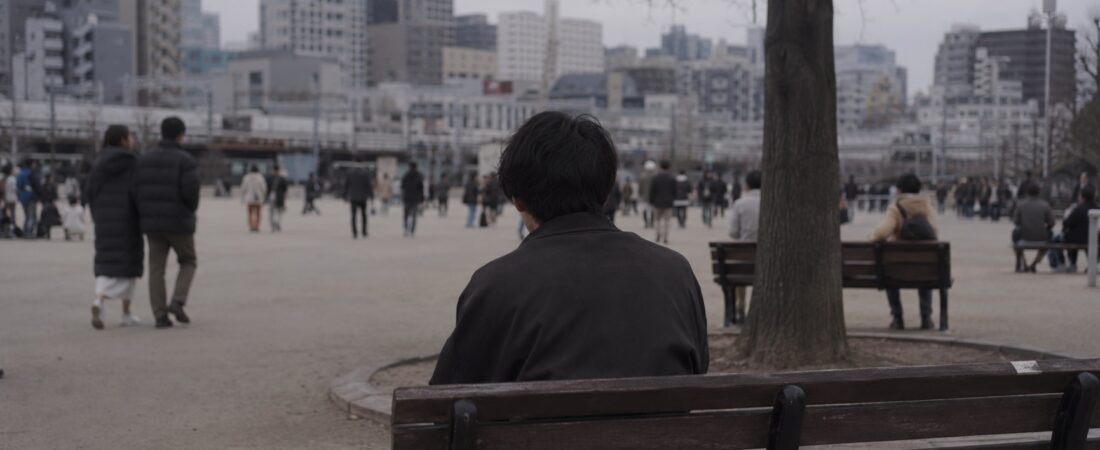
Are Japanese People Really Unhappy? The Quiet Pressure of Hitonami
Japan consistently ranks lower in global happiness surveys than its standard of living would lead you to expect.
Not at the bottom. Not even close. But uncomfortably low for a country with one of the highest standards of living, lowest crime rates, and most functional infrastructures on the planet.
The explanations you usually hear: long working hours, rigid social hierarchies, pressure to conform. All true. All incomplete.
Here’s what I think is actually going on.
The word that explains everything.
There’s a Japanese expression that doesn’t translate cleanly into English: 人並み — hitonami.
Literally, it means “in line with people.” To be hitonami is to be at the same level as those around you. Not ahead. Not behind. Level.
It sounds harmless. It isn’t.
In most cultures, happiness is measured against some internal standard — what you want, what you value, what feels meaningful to you. In Japan, the default measuring stick is external. Not “am I doing well?” but “am I doing as well as everyone else?”
The difference sounds subtle. It isn’t.
One hundred million middle class.
For decades after World War II, Japan operated on a shared social myth: ichioku sōchūryū — “one hundred million middle class.” The idea that virtually everyone in Japan belonged to the middle class. Not rich, not poor. The same.
It wasn’t entirely false. Japan’s postwar economic miracle genuinely did produce a relatively flat income distribution compared to other developed nations. A factory worker and a mid-level salaryman lived surprisingly similar lives — similar apartments, similar appliances, similar trajectories.
But the myth outlasted the reality. And more importantly, it created a baseline: this is what normal looks like. This is what everyone has. Falling below it is failure. Exceeding it is suspicious.
The floor became the ceiling.
横を見る — Looking sideways.
There’s another way to understand this. From where I stand, Korean social comparison often feels more vertical — people measure themselves against those above them. It drives ambition, sometimes to a brutal degree, but it also creates momentum. You’re trying to get somewhere.
In Japan, the comparison is horizontal. You’re not looking up. You’re looking sideways — at your neighbors, your colleagues, your classmates. Not to surpass them. To make sure you’re not falling behind.
The anxiety isn’t “I want more.” It’s “I don’t want less than everyone else.”
That’s a subtle but devastating shift. Because when you’re looking sideways, there’s no finish line. Everyone around you is also moving. The standard keeps shifting. You can never arrive.
This grid follows you across an entire life. The black recruit suit worn by virtually every job-seeker in Japan — identical, by unspoken agreement. The quiet pressure to marry by a certain age, to have children on schedule, to take out a thirty-five-year mortgage on a new house in a respectable neighborhood. The children’s cram schools, the piano lessons, the after-school activities chosen not because the child loves them but because the neighbors’ children are doing them too. And eventually, a funeral of appropriate size and cost — because even the end of a life has a hitonami to maintain.
At every stage, the question is the same: am I level with everyone else?
What this looks like in practice.
I’ve seen this in cosmetic surgery. Japan has a large and normalized cosmetic surgery market, especially around subtle procedures. Double eyelid surgery — one of the most familiar procedures in Japan — doesn’t always read as wanting to look striking.
American cosmetic surgery culture, broadly, is about becoming the best version of yourself. Bigger, sharper, more dramatic. An expression of individual aspiration.
In Japan, the motivation looks different — at least from the outside. It reads as a protective measure — a way to ensure one doesn’t fall below the visual baseline of the peer group. The goal isn’t to become more. It’s to not be less.
Why this makes happiness structurally difficult.
Happiness researchers generally agree on one thing: people who derive their sense of self-worth from external comparison are less happy than those who don’t. Not because comparison is wrong, but because external standards are unstable. They shift. They’re outside your control.
When your benchmark is “everyone else,” you are permanently at the mercy of everyone else.
Japan has built an entire social architecture around hitonami — being level with the people around you. It shows up in how children are raised, how schools operate, how workplaces are structured. Standing out too much is uncomfortable. Falling behind is shameful. The safe zone is narrow, and it moves.
In that system, it’s not that Japanese people don’t want to be happy. It’s that the conditions for feeling “enough” are almost impossible to meet — because “enough” is defined by a standard you don’t control and can never quite reach.
Is anything changing?
Partially. Younger Japanese people, particularly those with international exposure, are pushing back against hitonami in visible ways — through fashion, through career choices, through openly rejecting the salaryman trajectory their parents followed.
But the underlying wiring runs deep. The language still carries it. The school system still enforces it. The workplace still rewards it.
Maybe that is why happiness in Japan can feel so strangely difficult.
The country gives you many things that should make life feel secure: safety, order, convenience, predictability. But security is not the same as enough.
Hitonami teaches you to look sideways before you look inward.
And when you spend your life checking whether you are level with everyone else, it becomes very hard to know what your own level was supposed to be.
All of the above is one Japanese person’s interpretation. Treat it accordingly.


Leave a Reply